Back then, Anglo-Saxon used the term “weax”,
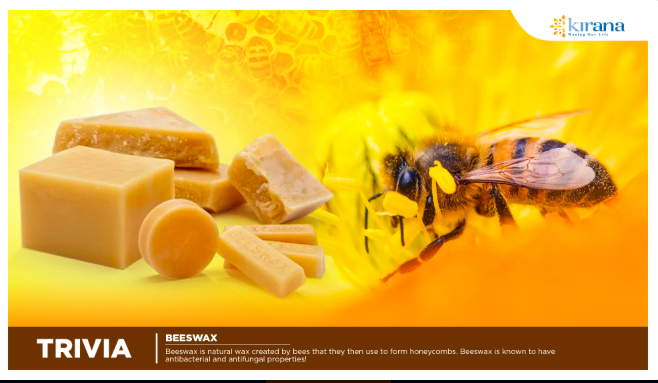
that is the name applied to natural resource from the honeycomb of the bee.
Nowadays,
the term “wax” has taken on a huge significance and is generally applied to all wax-like solids
found in nature.
The typical characteristics of wax are:
Hydrophobic: it can repel water and act as a coating or
protective layer for
many substances
Not soluble in water,
but soluble in polar solvents such as ether,
benzene,
and certain esters
Solid in room temperature and have typical melting point
between 40° Celsius
and 80° Celsius (104°F and 176°F).
Colorless and odorless
What is Paraffin
Comes from Latin words “parum” & “affinis”,
meaning very little or lack of affinity and reactivity
Paraffin is a mineral wax. It is one of the derivatives from
crude mineral oil that has been refined further to produce a certain purity
In chemistry,
paraffin is used synonymously with alkane,
indicating hydrocarbons with the general formulation CnH2n+2
Paraffin is a good electrical insulator and an excellent material for storing heat
History of Wax
It starts from the Ancient Egyptians in 4200 BC. They found
the value of wax from bees and it was used in everyday life for sealing all things,
such as coating the inside of wine amphoras and covering the writing tablets. It’s been
founded in the tombs of Egypt. It had been used for embalming,
mummification,
and even as a sealing wax to seal the coffin of the Pharaohs.
Ancient Romans,
Early Greek,
and Chinese afterwards used tallow (a wax from animal’s fat),
wax from insect,
wax from whale’s fat,
and wax from bees,
to make candles for their houses and temples,
and for means to worship their gods and goddesses.
After that,
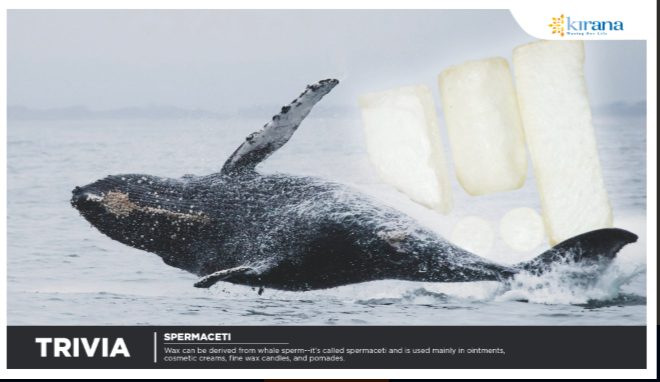
spermaceti wax was obtained by crystallizing the oil from the sperm of whales and was
the first candle substance to become available in mass quantities. The first so-called
standard candleswere made from spermaceti wax.
In the 1820s,
a French chemist discovered how to extract stearic acid from animal fatty acids. This
led to the development of stearin wax,
which was hard,
durable,
and burned cleanly. Stearin candles remain popular in Europe until today.
Paraffin wax was first founded in 1830 by a German chemist Karl von Reichenbach,
when he tried to develop the means to efficiently separate and refine the waxy
substances naturally occurring in petroleum. This discovery of paraffin wax made wax
became more readily available and adding to the clean and safe source for candle
industries and other applications.
Sources of Wax
It starts from the Ancient Egyptians in 4200 BC. They
found the value of wax from bees and it was used in everyday life for sealing all
things,
such as coating the inside of wine amphoras and covering the writing tablets. It’s
been founded in the tombs of Egypt. It had been used for embalming,
mummification,
and even as a sealing wax to seal the coffin of the Pharaohs.
Ancient Romans,
Early Greek,
and Chinese afterwards used tallow (a wax from animal’s fat),
wax from insect,
wax from whale’s fat,
and wax from bees,
to make candles for their houses and temples,
and for means to worship their gods and goddesses.
After that,
spermaceti wax was obtained by crystallizing the oil from the sperm of whales and
was the first candle substance to become available in mass quantities. The first
so-called standard candleswere made from spermaceti wax.
In the 1820s,
a French chemist discovered how to extract stearic acid from animal fatty acids.
This led to the development of stearin wax,
which was hard,
durable,
and burned cleanly. Stearin candles remain popular in Europe until today.
Paraffin wax was first founded in 1830 by a German chemist Karl von
Reichenbach,
when he tried to develop the means to efficiently separate and refine the waxy
substances naturally occurring in petroleum. This discovery of paraffin wax made wax
became more readily available and adding to the clean and safe source for candle
industries and other applications.
Classification of Paraffin Wax
Based on Oil Content
Fully Refined Paraffin Wax: Oil Content < 0.5%
Semi Refined Paraffin Wax: Oil Content 0.5% – 2%
Scale Refined Paraffin Wax: Oil Content 2% – 5%
Slack Wax: Oil Content>5%
Based on Melting Point
High Melting Point Wax: Melting Point>62°C
Medium Melting Point Wax: Melting Point 55°C – 60°C
Low Melting Point Wax: Melting Point < 55°C
Based on Hardness
Hard Wax: Needle Penetration < 25 dmm@25°C
Soft Wax: Needle Penetration>25 dmm@25°C
Based on Hydrocarbon Chain Branch
Macrocrystalline Wax (used to be called Paraffin Wax): contains mostly
straight-chain (normal) hydrocarbons
Microcrystalline Wax: contains high percentage of ISO paraffinic
(branched) and naphthenic hydrocarbons